

The Vibe
Mammoth exists because Dave McCoy spent his days measuring snowpack for the Los Angeles Department of Water and Power and couldn’t stop coming back to one stretch of the Eastern Sierra. Sometime in the 1930s, that turned into an obsession. He borrowed $85 against his Harley-Davidson, bought a rope tow, and started what would eventually become Mammoth Mountain.
He spent the next few decades carving the runs himself with bulldozers and dynamite, shaping the mountain to follow the terrain rather than force it into something else. That’s still how it skis today. The runs don’t fight the mountain, they follow it.
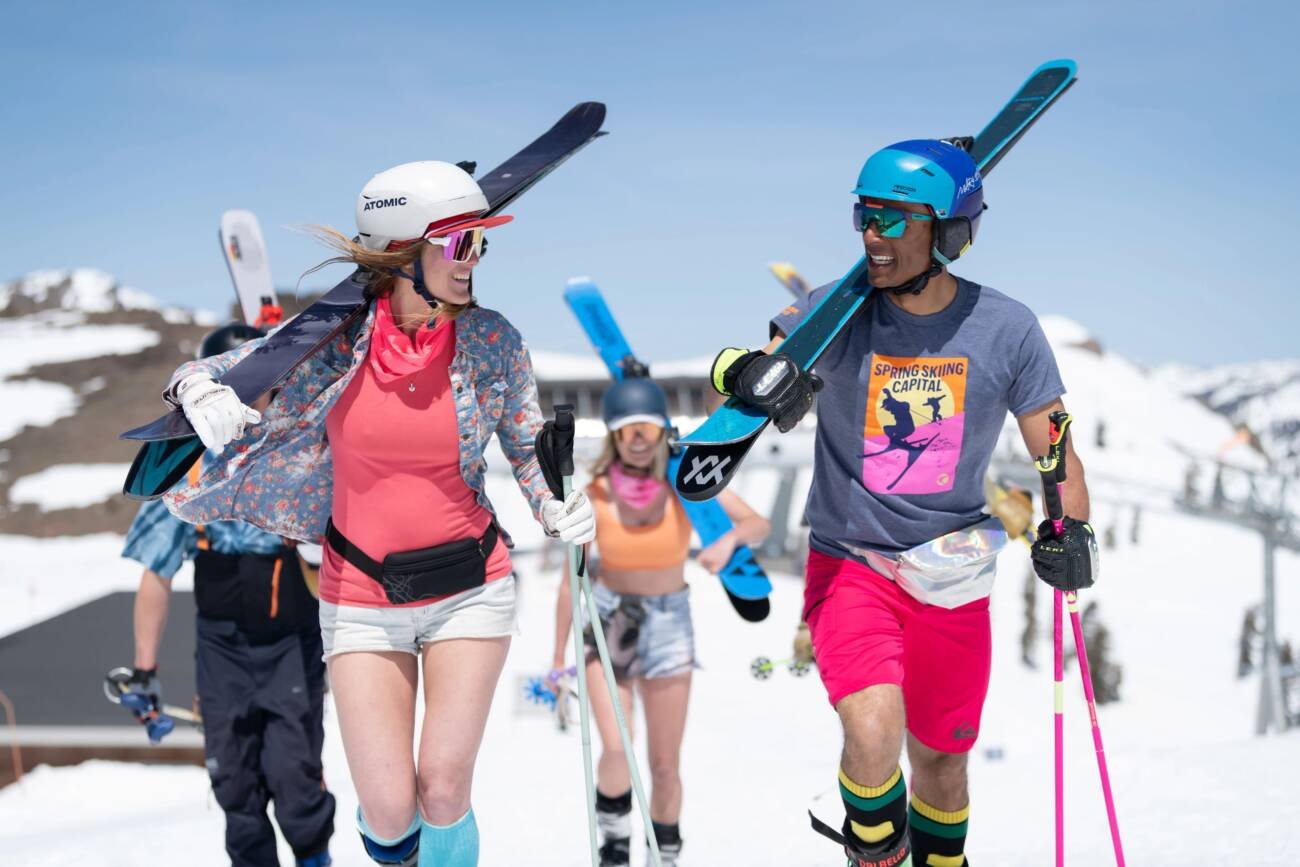
That history left behind a mountain that takes itself seriously and a town that mostly doesn’t. Locals talk about “wind buff”, the buttery snow that forms when Sierra storms and wind work the surface together, like it’s something sacred. On a bluebird afternoon, the deck at Canyon Lodge turns into what everyone calls The Beach, sun loungers included, and by early afternoon it’s more sunscreen than wax.
LA is close enough, five or six hours by car, that a decent powder forecast can empty out half the city and send it north. Midweek the place can feel deserted. By Saturday morning, the lift lines stretch across the base, everyone chasing the same wind buff the locals were talking about days before.
Resort Breakdown
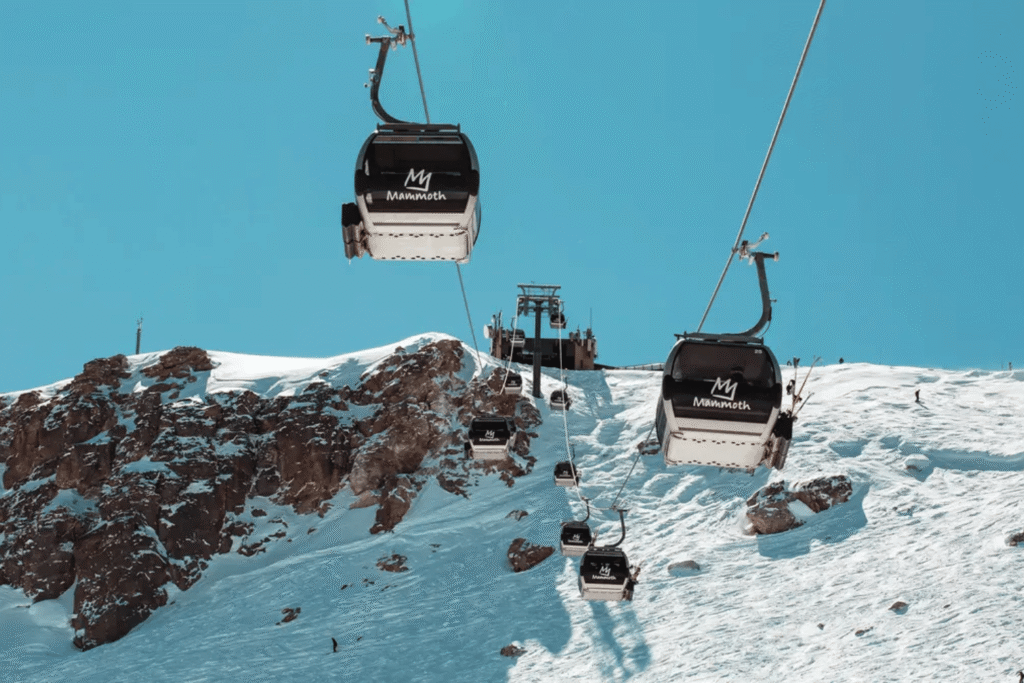
Mammoth’s terrain is split across three main bases, Main Lodge, Canyon Lodge and Eagle Lodge, and they genuinely feel like different mountains depending on where you start. Main Lodge sits closest to the summit and feeds the most exposed, above-treeline terrain, the kind of wide-open alpine bowls that make Mammoth’s name. Canyon Lodge is the village-adjacent base, reachable by gondola from town, and tends to be where the crowds sit thickest on a powder morning. Eagle Lodge is quieter and better suited to intermediate cruising, with less foot traffic even on a busy day.
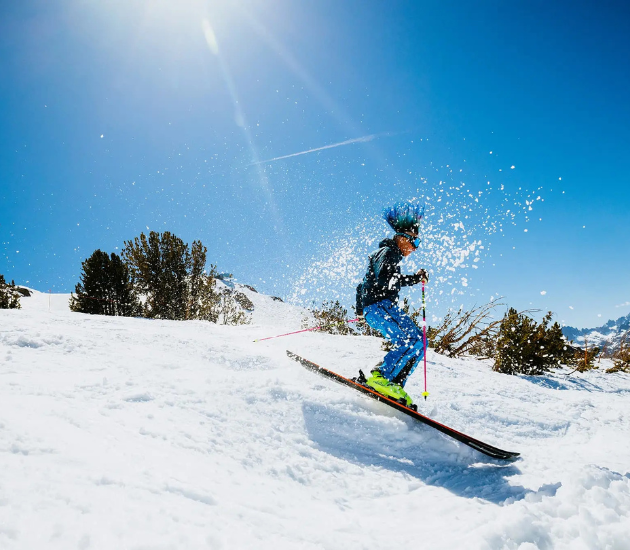
The beginner and intermediate terrain, which makes up 65% of the mountain between them, is genuinely good rather than an afterthought bolted onto an expert mountain. Long, wide groomers run off nearly every lift, and Eagle Lodge in particular is a solid base for anyone still finding their feet. The advanced and expert 35% is where Mammoth earns its reputation, though: chutes and cornices off the summit ridge, exposed bowls that hold snow well after a storm because of the elevation, and terrain that’s genuinely committing rather than expert-in-name-only.
Lift queues aren’t usually the problem they are at some California resorts, since most of the fleet is high-speed and Mammoth runs a lot of capacity. Where it does bottleneck is the base lodges themselves on a first-tracks powder morning, and on the two or three lifts locals know to avoid over a holiday weekend.
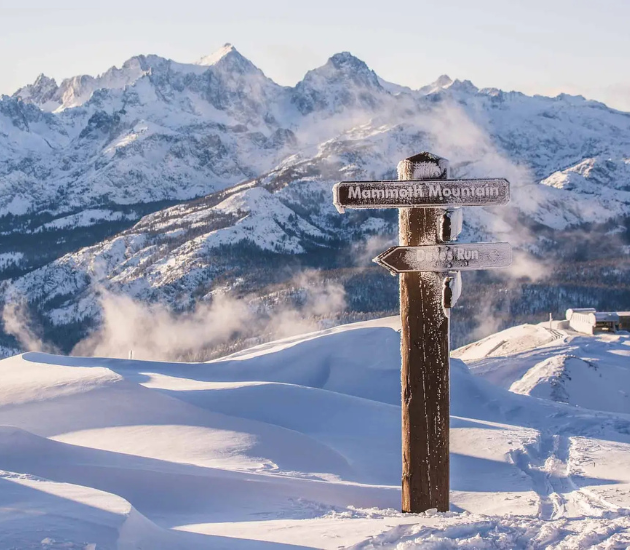
Snow reliability is one of Mammoth’s genuine strengths. The base sits near 8,000 ft and the summit tops 11,000 ft, high enough that the mountain holds its snowpack well into a California spring, long after lower-elevation resorts have started thinning out.
Click here to view Mammoth’s Winter Trail Map & Mountain Stats.
Getting There and Around
The closest airport is Mammoth Yosemite Airport (MMH), about 15 minutes from the mountain, with seasonal flights from Los Angeles, San Francisco and Denver. Flight schedules can be thin depending on the week, so it’s worth checking before locking in dates.
Reno-Tahoe International (RNO) is the more dependable option for flight frequency and rental car availability, but it’s a genuine haul: about 165 miles and 3 to 3.5 hours south down Highway 395, a drive that’s scenic but not short. Los Angeles is the other common entry point, closer to 300 miles and 5.5 to 6 hours by car depending on traffic through the Owens Valley.
Once in town, Mammoth Lakes runs a free shuttle looping between the village and all three base lodges, and it’s worth using rather than fighting for parking, especially on a weekend. A car isn’t essential if staying centrally, but it opens up June Mountain and the hot springs outside town.
Top Experiences
Mammoth runs eight parks across the mountain, from beginner-friendly jib lines to serious jump lines and three halfpipes, and it’s one of the more genuinely rider-built park programs in the USA.
It runs from Main Lodge or McCoy Station straight to the 11,053 ft summit, and the views out over the Eastern Sierra are worth the ride whether or not there’s a board strapped to your feet. Eleven53 Café sits at the top for a coffee or a beer with the view.
A short drive south on 395 and a ten-minute walk down a wooden path gets you to one of the more well-known undeveloped hot springs in the area. It’s not maintained by anyone, so the etiquette is simple: pack out whatever gets packed in.
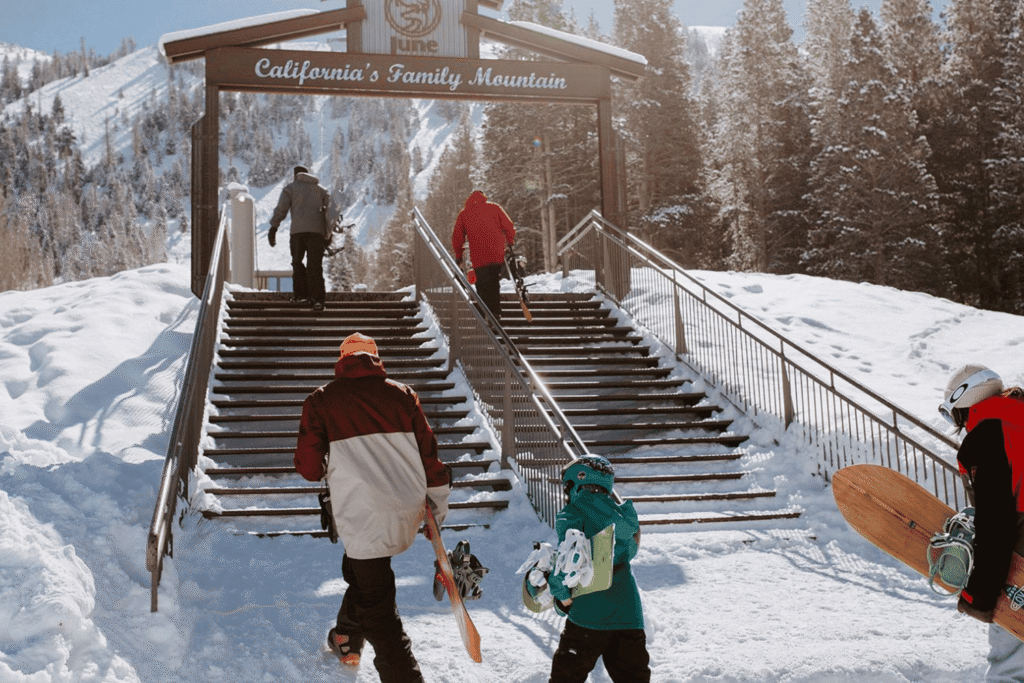
Twenty minutes north, same lift ticket, a fraction of the people. It’s the move on a holiday weekend when Mammoth’s parking lots are full by nine.
Mono Lake: the lake LA nearly drained dry
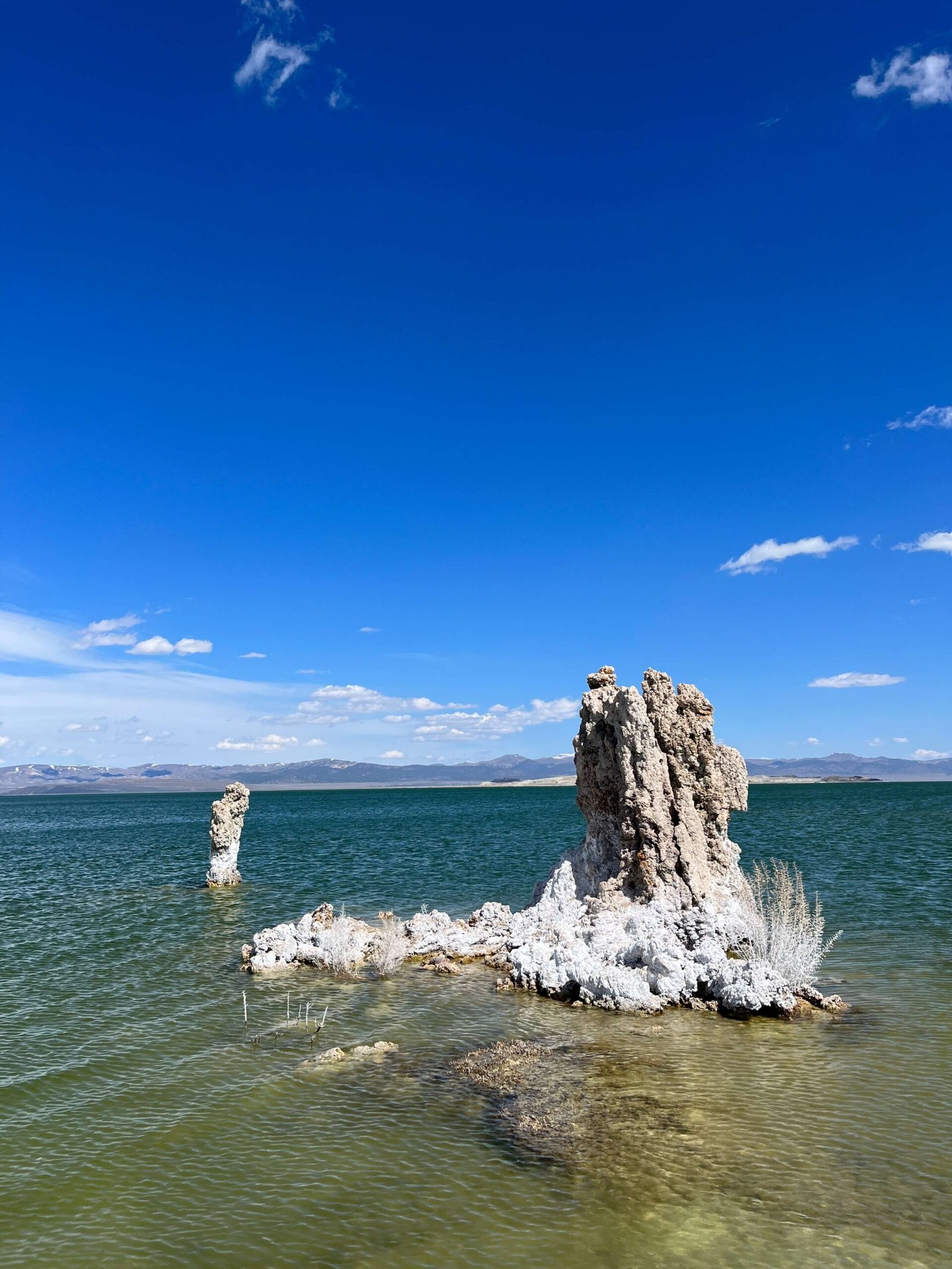
Forty minutes north of Mammoth on Highway 395, Mono Lake is one of the oldest lakes in North America, and it very nearly wasn’t a lake at all. The Los Angeles Department of Water and Power, the same agency Dave McCoy once worked for, started diverting the streams that feed it in 1941, and by the 1970s the lake had lost half its volume and doubled its salinity, dropping low enough to turn nesting islands into land bridges predators could simply walk across. A graduate student named David Gaines formed the Mono Lake Committee in 1978, and the fight that followed ran all the way to the California Supreme Court, which ruled in 1983 that the state had a duty to protect the lake regardless of LA’s water rights. The State Water Board finally capped the diversions in 1994 and set a target lake level the basin still hasn’t fully reached. The eerie limestone spires visitors photograph today, the tufa towers, are only standing above the waterline because of how far the lake dropped in the first place. It’s a strange kind of monument, proof of the damage and the fight to undo it, standing in the same spot.
Where to Stay
Eat and Drink
Mammoth Tavern is the locals’ happy hour, 30% off wine, draft beer and well drinks from 4 to 5:30pm daily, and worth timing a first run down for. Salmon poke tacos and ham and cheese croquettes are the two things regulars order without looking at the menu.
Vulcania, run by the Voltaggio brothers in the Village, does Neapolitan pizza and handmade pasta well enough to be a legitimate date-night pick rather than just a convenient one.
The Lakefront Restaurant inside the century-old Tamarack Lodge is the special-occasion table, ten seats overlooking Twin Lakes and about as far from a cafeteria as Mammoth dining gets.
The Stove has been serving the same style of hearty American breakfast for more than 40 years, farmhouse decor included, and the Sierra Sunrise skillet is the reason locals still queue for a table on a powder morning before heading up.
Dos Alas, tucked behind an equestrian centre off Sherwin Creek Road, is the genuine hidden gem, a Cuban and Puerto Rican kitchen doing pollo en escabeche, picadillo con arroz and yuca al mojo a long way from anything else on offer in town. It’s easy to miss and books out fast, so call ahead, and if a band’s playing, there’s a decent chance the whole room ends up dancing between courses.
Insider Tips
Use the free town shuttle. Parking fills fast on weekends and the shuttle removes the entire problem.
The base sits close to 8,000 ft and the summit tops 11,000, high enough that altitude genuinely affects some visitors on day one. Hydrate more than feels necessary.
On big holiday weekends, the two lifts locals steer around for queues are chairs 23 and 14, ride early or pick a different line.
Wild Willy’s and Hilltop hot springs are both close enough for an after-ski soak, but neither has facilities, so plan accordingly and pack everything back out.
If the mountain feels slammed, June Mountain is the same ticket and twenty minutes away with a fraction of the crowd.
Stay in the loop with curated stories on snow culture, mountain escapes, and the latest gear drops. Plus, score monthly giveaways made for the Snow Creatures crew.
Loved by over 5,000 skiers and riders.
Stay in the loop with curated stories on snow culture, mountain escapes, and the latest gear drops. Plus, score monthly giveaways made for the Snow Creatures crew. Loved by over 5,000 skiers and riders.
Loading form...