
Japan’s official winter forecast came out on 18 September, and it’s not the one anyone with a booked trip was hoping to read. The Japan Meteorological Agency is calling for a warmer winter than normal, with a lean towards below-normal snowfall along the Sea of Japan coast, which is where almost all of Japan’s powder falls.
That’s El Niño at work, and this year’s is shaping up to be a strong one. But an El Niño winter in Japan is a long way from a write-off. Where you ski and when you go matter more than the headline forecast, and seven decades of snowfall records tell a much calmer story than the headlines do. This guide covers what the outlook actually says, which resorts it hits hardest, and whether it’s worth changing your plans.
What does El Niño mean for Japan’s snow this winter?
Japan’s snow comes from a simple, reliable machine. Freezing air pours off Siberia, picks up moisture crossing the Sea of Japan, and dumps it as dry, deep snow the moment it hits the mountains on the west coast. El Niño slows that machine down, and the 2026/27 event looks like a big one. In its 10 September update, the US Climate Prediction Center put a 75% chance on a historic El Niño between October and December, stronger than any since records began in 1950.
The Japan Meteorological Agency’s cold-season outlook, issued on 18 September, follows that script. It favours a warmer winter than normal across much of the country, with El Niño weakening the pressure pattern that normally drives cold air and snow onto the Sea of Japan coast.
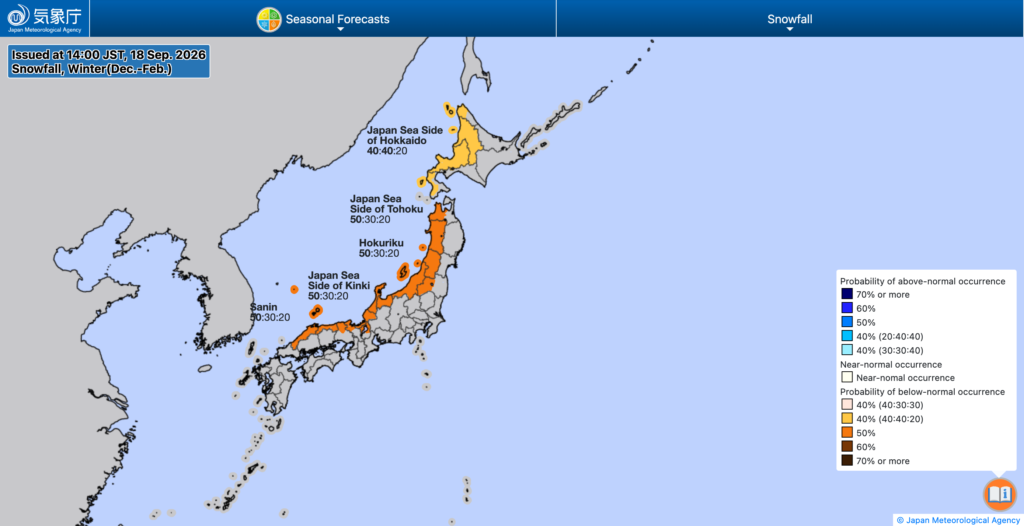
For snowfall, JMA gives each Sea of Japan region odds of a below-normal, near-normal or above-normal winter between December and February.
| Region | Ski Resort Reference | Below normal | Near normal | Above normal |
| Hokkaido, Sea of Japan side | Niseko | 40% | 40% | 20% |
| Tohoku, Sea of Japan side | Zao | 50% | 30% | 20% |
| Hokuriku | Myoko, Naeba | 50% | 30% | 20% |
Two things are worth knowing before you panic. A below-normal winter in Japan is measured against a very high bar, and the outlook covers three months as a whole, so short-term systems can still bring heavy snow in an El Niño year.
JMA doesn’t issue a snowfall category for Nagano, so Hakuba and Nozawa Onsen aren’t in the table. More on them below.
Is El Niño bad for Niseko?
On the long-run records, not by much. An analysis of 73 seasons of official JMA snowfall data from Kutchan, the town in the valley below Niseko’s main resorts, found almost no measurable link between El Niño winters and Niseko’s snowfall.
Other analyses land in the same place. An earlier look at JMA’s Kutchan data concluded El Niño has a fairly minor effect on Niseko’s skiing, and multiple sources rate Hokkaido resorts like Niseko as the most snow-reliable in Japan this winter.
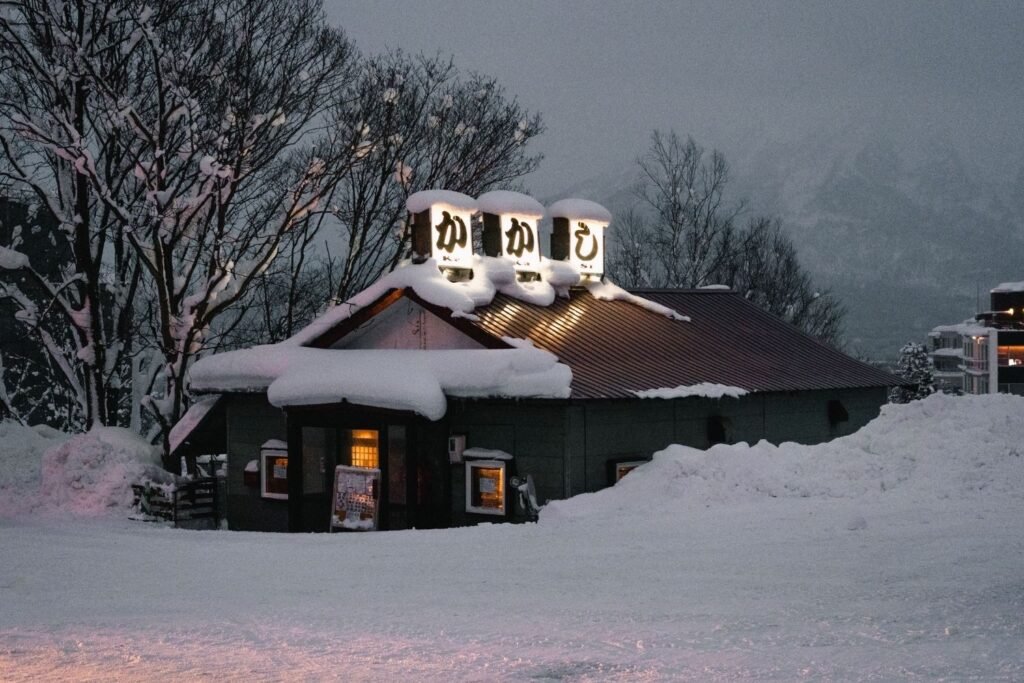
The resort’s own numbers show how high the floor is. Niseko’s leanest season in recent memory was 2019/20, a record-setting low year in Kutchan’s data, and the resort still recorded 10.7 metres of snow mid-mountain.
In a normal year, the resort’s average snowfall is at 12 to 16 metres.
Is Hokkaido or Hakuba better in an El Niño year?
Hokkaido holds up better, mostly because of its geography. It sits further north and is colder, so a milder winter there is usually still cold enough to snow. Long-run analysis found Honshu measurably more exposed to an El Niño winter than Hokkaido, and this year’s official outlooks lean the same way, giving Hokkaido’s Sea of Japan side normal to below-normal snow against a below-normal call for Honshu.
That doesn’t make Honshu a bad bet, it just means less margin. Hakuba’s record season was only two winters ago, when the valley logged 782cm in 2024/25, its highest single-winter total, and a lean three-month outlook still leaves room for big individual storms.
If you’re choosing between Niseko and somewhere like Hakuba or Myoko this year, the forecast gives Hokkaido the edge on snow reliability.
Best month to ski Japan this winter
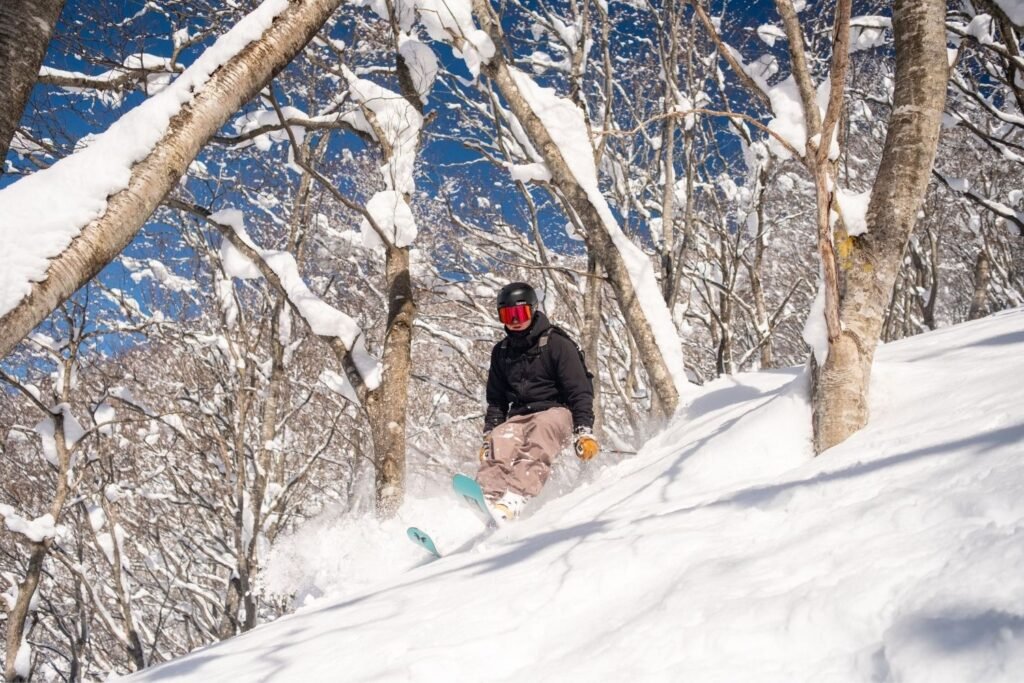
If you haven’t locked in dates, aim for mid-January to mid-February. OpenSnow‘s analysis of past strong El Niño winters puts Hokkaido’s weakest snow signal in December and March to April, with January and February much closer to normal. Independent forecaster Matt Guy points to the same window as the safest bet, with more caution around December and the spring months.
Japan can also turn around quickly. Last season had a warmer than usual December and one of Niseko’s slowest starts in years, then heavy snow arrived from mid-January to mid-February.
December is the month to think twice about this year, particularly for Christmas trips to Honshu. It’s not that December will be bad, just that early-season cover depends on the cold arriving on time, and El Niño makes that less certain.
Should you change your Japan ski booking?
For most people, no. If you’re headed to Hokkaido in January or February, the forecast barely touches your trip, and the records suggest you’re in for a normal Japanese winter, which on Niseko’s slopes means somewhere between 12 and 16 metres.
If you’re booked on Honshu, especially in December, it’s worth a little flexibility rather than a cancellation. A base with a few resorts in reach, like Hakuba’s valley or the Myoko area, lets you chase the best conditions day to day, and higher terrain holds snow better when a warm spell rolls through. If your accommodation or flights allow a free date change, that’s the cheapest insurance you’ll get.
The forecast will also get sharper. JMA updates its three-month outlook around the 25th of every month and its one-month outlook every Thursday, so by late November the picture for January will be far clearer than it is now.
The short version
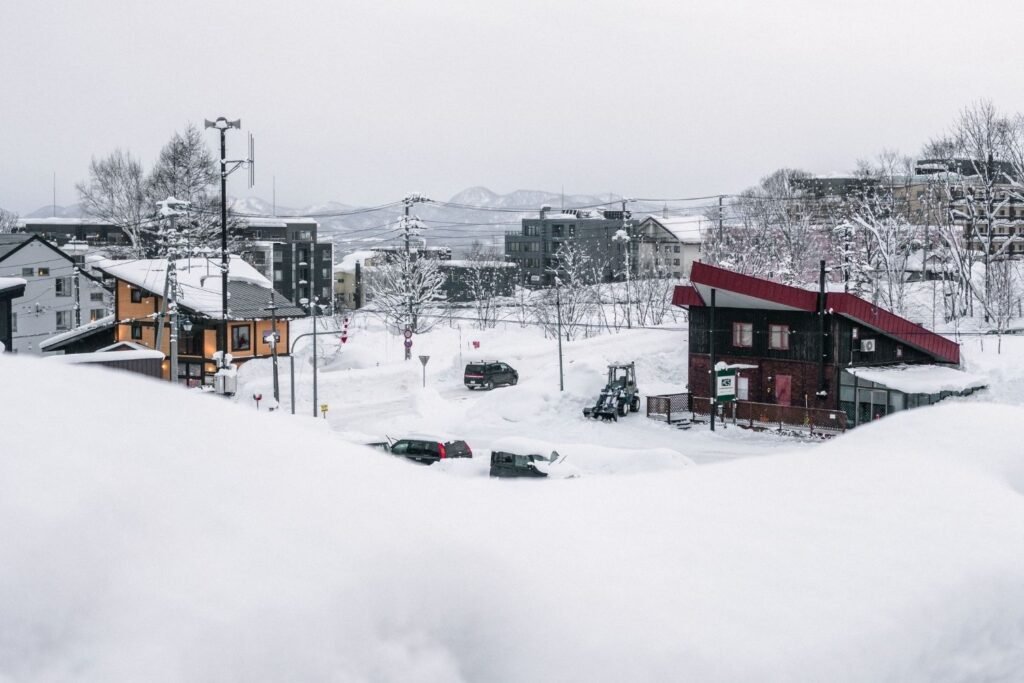
This winter’s forecast is a real downgrade on paper, but it’s a downgrade from La Niña’s bonus rather than from a normal Japanese winter. Hokkaido in January and February is about as safe a bet as snow travel gets, and Honshu still looks a lot like an average year, just with less margin for a warm December.
We’ll be tracking every JMA update between now and the first big storms, and the newsletter is where it lands first. Sign up so you don’t miss out, and join a community of over 5,000 skiers and snowboarders.