
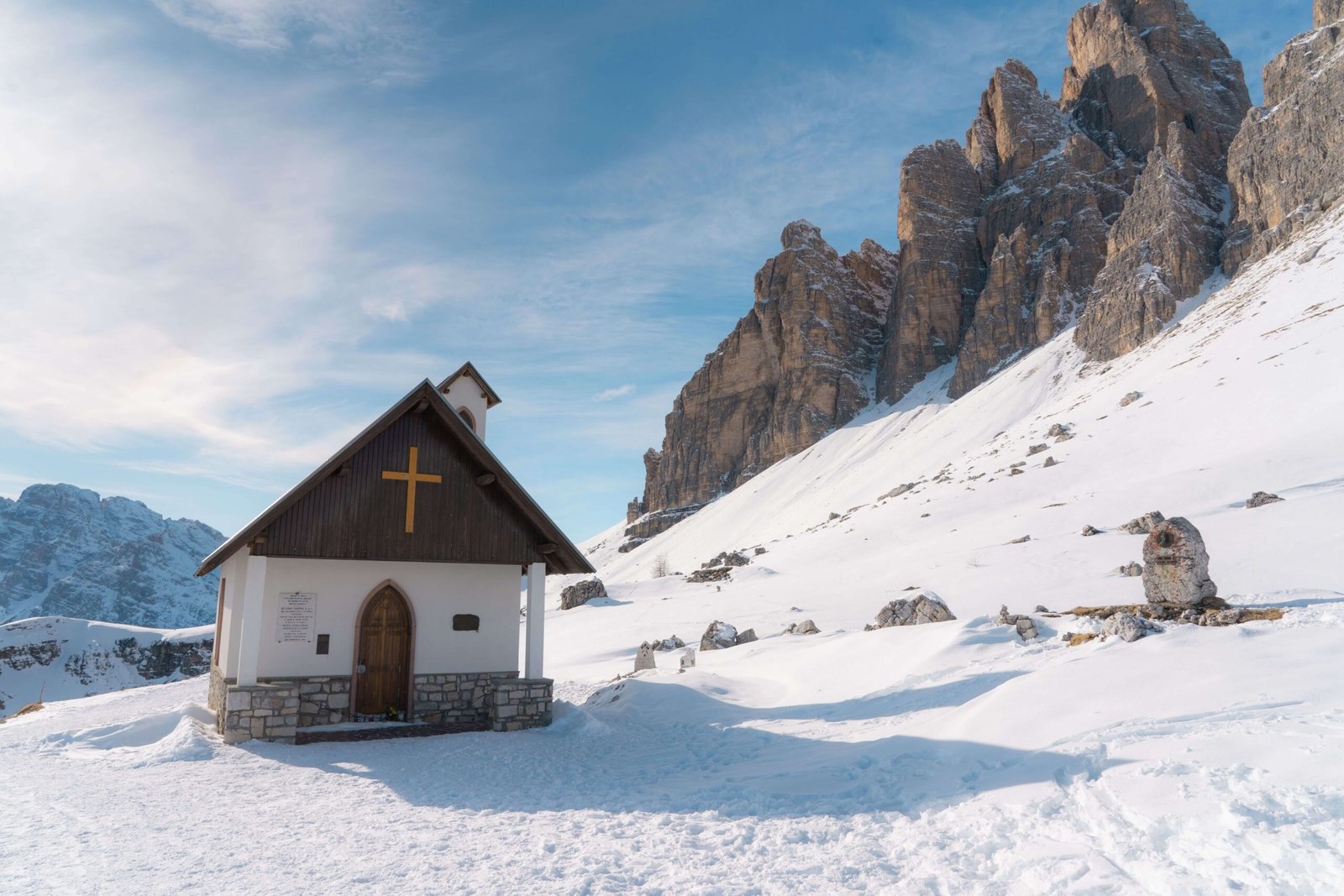
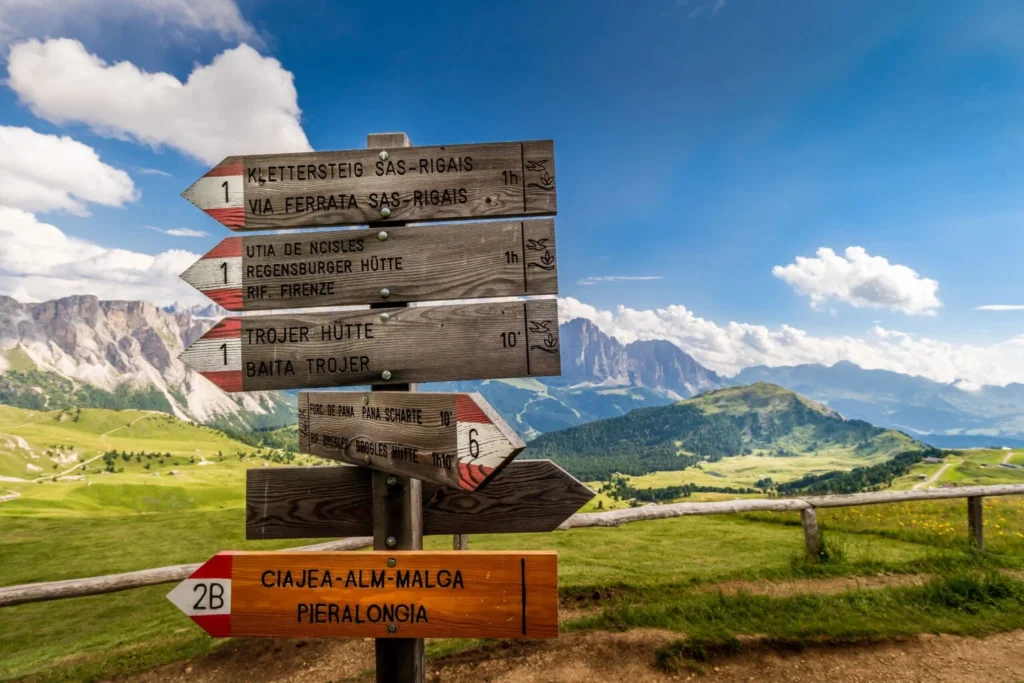
Ski a run above Alta Badia and the trail markers won’t be in Italian or German. They’ll be in Ladin, a language older than either, still spoken in the valleys the Olympics just skied through.
A region that changed hands, not culture
South Tyrol only became Italian in 1919, handed over from Austria-Hungary after the First World War. The mountains didn’t move. The people speaking German in them did not, for the most part, either. What changed was the border, and for the next two decades, Rome tried to make the map match the language.
Mussolini’s government pushed Italianisation hard: German was banned in schools, place names were rewritten in Italian, and workers from the south were relocated north to shift the population balance. South Tyroleans responded with Katakombenschulen, underground schools run in cellars and barns to keep German alive in secret. Between 1939 and 1943, families were forced into an even sharper choice, stay in Italy and lose the language, or emigrate to Nazi Germany. Most stayed.
How three became official
The postwar settlement came slowly. Austria and Italy signed the Gruber-De Gasperi Agreement in 1946, and South Tyrol got its first Autonomy Statute in 1948. It wasn’t enough, and tensions ran through the following decades before the Second Statute of 1972 handed the province real legislative power along with school boards, broadcasting rights and political representation for its minorities.
Ladin, the region’s oldest language, waited longest for recognition. It’s a Rhaeto-Romance tongue, descended from the Latin spoken by Roman soldiers who arrived in 15 BC, and it survived in the high valleys largely because those valleys were hard to get to. Ladin wasn’t declared an official language until 1989, more than forty years after German and Italian.
Where you’ll actually hear it
Today the numbers sit at roughly 70 percent German-speaking, 26 percent Italian, and 4.5 percent Ladin, but percentages undersell how concentrated Ladin culture is on the ground. Val Badia and Val Gardena are its strongholds, along with pockets of Fassa, Livinallongo and Ampezzo across the regional border. Drive through those valleys and the road signs run three deep, Ladin on top. Everywhere else in South Tyrol, it’s just German and Italian.
The dialect map gets messier once you’re off the signage. South Tyrolean German has around forty regional variations depending on the valley, and standard German is mostly a written, school and media language rather than something spoken at the bar. Italian speakers, largely descended from that Fascist-era migration, are concentrated in Bolzano and Merano and are, oddly, the only Italian-speaking population in the country with no local dialect of their own. Three generations wasn’t enough time to grow one.
Why this matters for anyone skiing here now
Milano Cortina put a global audience on this ground for the first time in decades. The biathlon events ran through Anterselva, deep in South Tyrol’s Val Pusteria, while Cortina itself sits just across the regional line in a valley that was Ladin-speaking long before it was Italian or hosted an Olympics at all. None of that history is on the tourist maps most visitors are handed.
Locals will code-switch without thinking about it, German at the till, Italian on the phone, Ladin at home, and the language someone reaches for first tells you something real about which valley they’re from and how long their family has been there. It’s not a party trick. It’s the terrain doing what terrain does, keeping cultures apart just long enough for each one to hold its shape.
That’s the version of South Tyrol worth understanding before you ever click into a binding here, and it’s the one we’ll keep coming back to as we settle into Bolzano ourselves.